
What Women Inherit: Understanding the Mother-Daughter Relationship Through Generational Trauma

There is something uniquely powerful about the relationship between a mother and daughter. It can hold love, admiration, tenderness, frustration, closeness, distance and sometimes emotions that are difficult to put into words. It is also a relationship between two women who, although separated by a generation, may have been shaped by very different worlds.
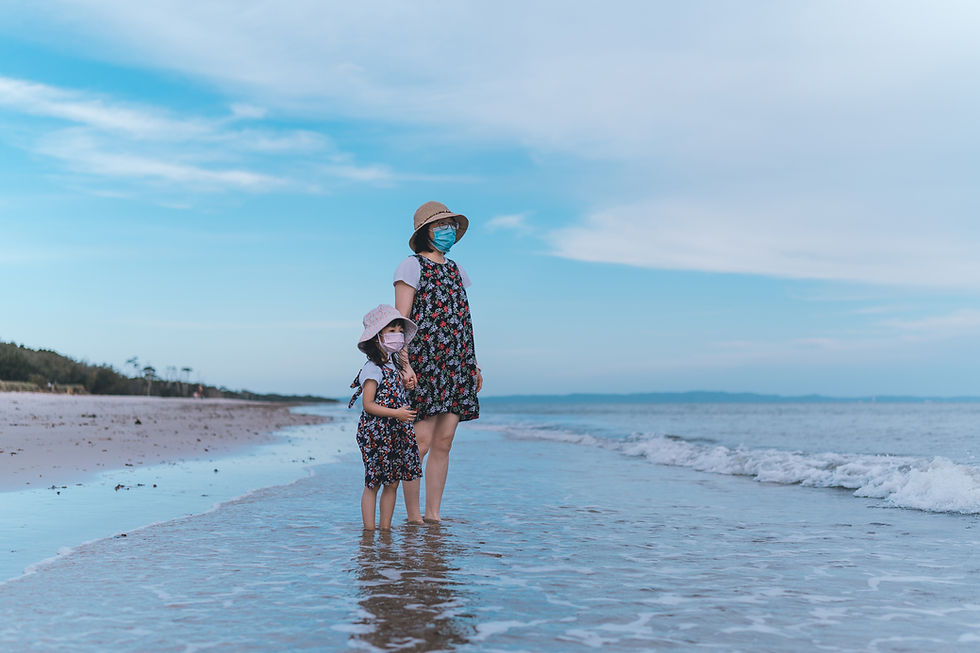
Our mothers grew up with their own mothers. Their mothers had their mothers. And each generation of women has inherited ideas about what it means to be female, to be a partner, to be a mother, to have a body, to work, to care for others and to take up space in the world.
Some of those inheritances are beautiful. Others are painful. Most are complicated.
When we look at the mother-daughter relationship through this lens, perhaps the question isn't "What did my mother do wrong?" but "What did the women before me have to carry, and how has some of that shaped me?" That is a very different question. And it can open the door to compassion, understanding and, ultimately, healing.
Every generation of women has had its own struggles
The expectations placed upon women have changed enormously.
Previous generations were often navigating a world where their choices could be much more limited. Marriage, motherhood and caring for the family were frequently treated as central measures of a woman's worth. Financial independence was not always accessible. Talking openly about sexuality, mental health or dissatisfaction could carry considerable stigma. Many women simply got on with things. They endured. They adapted. They made the best decisions they could with the resources and knowledge available to them.
That doesn't mean everything was easy or that painful patterns didn't exist. It means that when we look back, there is value in asking what those women were responding to.
A mother who seemed overly self-sacrificing may have learned that caring for everyone else was what a good woman did. A mother who struggled to express emotion may have grown up in a family where emotions weren't discussed. A mother who worried constantly may have lived through experiences that taught her the world wasn't always safe. A mother who encouraged her daughter to be financially independent may have known first-hand what it meant not to be.
Behind many behaviours are stories. And sometimes understanding the story changes how we see the behaviour.
The inheritance of being a "good woman"
Every generation has its own version of the "good woman".
For some of our mothers and grandmothers, she may have been selfless, dependable, modest, nurturing and endlessly capable.
Today, the ideal can look very different. The modern woman is often expected to be independent, successful, emotionally intelligent, physically healthy, attractive, sexually confident, professionally fulfilled and present as a parent — preferably all at the same time.
The expectations may have changed, but the pressure remains. We may have moved from thinking that a good woman puts everyone else first, to a successful woman can do everything. However, neither leaves much room for being human. And this is where generational understanding becomes important. Our mothers may have carried one set of expectations. We may carry another. Neither generation necessarily failed. They were responding to the world they lived in.
When mothers want more for their daughters
There is something deeply loving about a mother wanting her daughter to have more than she had. Perhaps she wants her daughter to have a career because she didn't have one. She wants her daughter to be financially independent because she knows what dependence felt like. She encourages her daughter to speak up because she remembers all the times she couldn't. She tells her daughter not to settle because she settled.
These intentions often come from love. But sometimes our hopes for our children can also carry some of our unfinished stories. For example, a mother may desperately want her daughter to avoid the pain she experienced but the consequence is that her daughter may then feel pressure to make the opportunities her mother didn't have count, and this is a very heavy burden to carry for the daughter. This isn't necessarily dysfunction. It is something deeply human.
We all hope that the next generation will have an easier life. The challenge is allowing the next generation to discover what their life needs to look like.
The daughter has a story too
Growing up also means developing an identity separate from our parents. For a daughter, part of becoming herself can involve asking: Who am I, apart from my mother? Sometimes we identify strongly with our mothers at other times we feel completely different, like spending years trying not to repeat their lives. And sometimes, as we get older, we begin to recognise ourselves in them in unexpected ways - We hear ourselves saying something our mother used to say. We notice a familiar worry. We respond to stress in a way we recognise from childhood. We discover that something we once found frustrating about our mother now makes more sense.
This can be one of the great shifts of adulthood, where we begin to see our mothers not only as our mothers, but as women - women who had childhoods; women who had hopes; women who had disappointments; women who may have had dreams that weren't possible at the time; women who were themselves daughters once.
And perhaps that perspective allows something new to emerge. Not necessarily forgiveness or reconciliation. But understanding.
Generational trauma isn't always dramatic
When we hear the word trauma, we can understandably think of profound events such as abuse, neglect, violence or loss. These experiences can certainly have intergenerational effects. However, generations can also pass down subtler emotional patterns. Such as - a family may learn not to talk about difficult things; a woman may learn to cope by keeping busy; another may learn to suppress anger; another may become extremely responsible; another may find it difficult to ask for help. These responses may have been useful at one point in time. They may even have helped women survive circumstances that gave them very few other choices. Unfortunately, sometimes a strategy that protected one generation can become restrictive for the next.
Some of the messages and the consequences for the next generation might have been.
From - "Don't make a fuss." To - "Don't have needs."
From - "Keep the family together at all costs." To - "My needs come last."
From - "Be careful." To - "The world is dangerous and I must always be prepared."
These patterns can travel quietly through families. And they aren't evidence of bad mothers. They are evidence of human beings adapting to their circumstances.
Understanding is not the same as excusing
Compassion doesn't mean pretending that painful experiences weren't painful. We can understand the circumstances that shaped our mothers and still acknowledge the ways those circumstances affected us. We can say that we understand why you found that difficult however, it was difficult for me too. Both can be true. And this is an important part of therapeutic work. Because when we move away from blame, we don't have to move into denial. We can become curious instead.
We explore -
What happened
What did I learn?
What did my mother learn?
What did she inherit?
What was available to her at the time?
What wasn't?
And perhaps most importantly: What do I want to do with what I've inherited?
Where therapy can help
Therapy can offer a space where these questions can be explored without having to decide who is right or wrong. The purpose isn't necessarily to analyse your mother. It is to understand yourself in the context of your relationships and your history.
We might explore attachment, family roles, boundaries, emotional patterns, beliefs about being a woman, experiences of motherhood, body image, relationships, guilt or the expectations that have travelled through generations.
Sometimes therapy helps us recognise that a reaction we have today belongs partly to an earlier experience. Sometimes it helps us grieve what we didn't receive. Additionally, it helps us appreciate what we did receive. It helps us hold both at the same time.
And sometimes therapy allows us to see our mothers with greater complexity — not as perfect or imperfect, but as women who were themselves shaped by a particular time, family and set of circumstances.
That doesn't mean we have to agree with everything they did. It simply means we can understand it in context.
The possibility of doing things differently
Perhaps one of the most hopeful aspects of understanding generational patterns is realising that inheritance isn't destiny. We don't have to reject everything our mothers taught us. There may be qualities we treasure deeply: resilience, loyalty, humour, determination, warmth, resourcefulness, courage, care. There may also be things we want to approach differently: perhaps we want to communicate more openly, ask for help more readily, have healthier boundaries, make space for our own needs, parent differently, have conversations that previous generations couldn't have.
Not because our mothers failed.
But because we have access to knowledge, language and support that previous generations may not have had.
Every generation builds on the one before it.
The gift of seeing women as whole people
Perhaps this is ultimately what a more compassionate understanding of the mother-daughter relationship offers us.
We can stop reducing women to their roles. A mother is not only a mother. She was once a daughter. She was a girl. She had hopes and fears before she had children. She was shaped by her parents, her culture, her relationships and the circumstances of her life.
And her daughter is also more than a daughter. She is becoming her own person, while carrying pieces of the women who came before her.
There can be tenderness in recognising that - We don't have to choose between independence and connection; between understanding and boundaries; between honouring our mothers and becoming ourselves.
Perhaps healing is about making room for all of these things.
What will we carry forward?
Generational healing doesn't mean creating a perfect family history. It means becoming more conscious of what has been handed to us. We can look at the women who came before us with curiosity and recognise the worlds they lived in. We can acknowledge what they survived and appreciate what they gave us. We can grieve what they couldn't give. And we can gently decide what belongs in the next generation.
Because the women who came before us did not have the benefit of everything we know today. And the women who come after us will know things we don't yet know. That is how healing across generations can work. Not by blaming the past. Not by erasing it. But by understanding it well enough to carry forward the love, wisdom and resilience — while gently loosening our grip on the patterns that no longer serve us.
We are not separate from the women who came before us.
We are part of their story.
And, with awareness and support, we also have the opportunity to become part of how that story changes.


Comments